
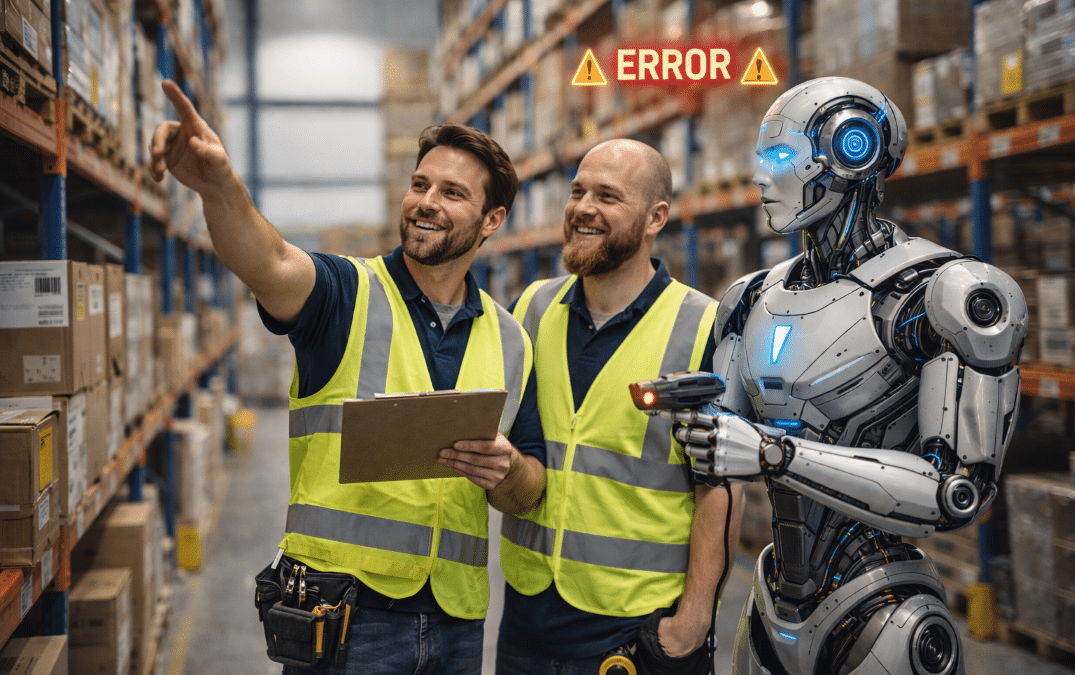
Advantage Shifts to Who You Know – and Who You Trust
No matter how advanced the technology, AI cannot replace relationships.
Artificial intelligence can process more data than any team and surface patterns quickly. You can find answers in minutes that used to take weeks.
But it cannot tell you who will actually deliver.
That gap is becoming more visible as AI spreads across every function. In Logistics and Supply Chain, teams use it to model networks and manage risk. In Procurement, it evaluates suppliers and analyzes spend. In Entrepreneurial Growth, it screens opportunities and benchmarks performance. In Digital Enablement, it drives automation and system insights. In Organizational Development, it helps map roles and identify inefficiencies.
The tools are improving fast. And everyone has access.
But not everyone gets results.
As my Tompkins Ventures colleague Steve Robinson puts it, “In today’s environment, know-who is just as important as know-how.”
That line captures the shift. Know-how is easier to access than ever before. Knowing who to trust, who to call and who can solve problems and execute at a high level under pressure still takes experience, judgment and a strong network.
That is where AI cannot replace relationships.
AI Cannot Replace Relationships in Logistics and Supply Chain
You can model a network in minutes. You can simulate routes, costs and service levels across continents. Enter a few prompts, and voila, you have a list of alternative suppliers and carriers.
But when disruptions hit a lane or capacity tightens overnight, models don’t move freight.
People and infrastructure do.
In logistics and supply chain, performance shows up in real time. Trucks either arrive or they don’t. Containers either clear or they sit. Production either continues or it stops.
Those are the moments where relationships matter.
That low-rate transportation provider suddenly has no availability. Now you need a network with the depth to actually secure capacity.
Who gets the call returned? Who finds a solution when the original plan breaks?
Transportation providers look similar on their slick websites. Service offerings overlap. Technology platforms present similar AI-powered dashboards.
But when demand spikes, when materials run short, when schedules slip, the question is simple: who leans in, and who pulls back? Some partners step in and solve problems. Others explain why they can’t.
You don’t learn that from an algorithm. You learn it from experience.
That is where AI cannot replace relationships.
AI Cannot Replace Relationships in Procurement
Artificial intelligence can evaluate vendors faster than any sourcing team. It can compare pricing, analyze spend patterns and recommend alternatives in minutes.
That changes how Procurement starts. But it does not change how Procurement succeeds.
Sourcing decisions still come down to judgment. Not just who looks good on paper, but who performs when conditions change.
Procurement spent years driving cost out of the system. Teams increased competitive bidding and expanded supplier pools. Contracts became more structured.
But along the way, depth gave way to breadth.
Many organizations now manage large supplier portfolios without truly knowing who they rely on. When everything runs smoothly, that works.
When conditions tighten, it doesn’t.
A supplier that wins on price may not prioritize your business when disruptions limit production. A contract may define terms, but it does not create commitment.
Artificial intelligence can highlight alternatives and expose value leakage. But it cannot build trust with suppliers. It cannot pick up the phone, visit (or Zoom) and strengthen a relationship. It cannot create alignment when teams must make trade-offs.
That kind of problem-solving still depends on people.
Strong Procurement organizations understand this. They use analytics to inform decisions, but they invest time in building relationships with the suppliers that matter.
They know who will be transparent when disruptions happen. They know who will adjust, collaborate and deliver when the plan breaks.
That is where AI cannot replace relationships.
AI Cannot Replace Relationships in Entrepreneurial Growth
Artificial intelligence can screen opportunities faster than any deal team. It can analyze financials, benchmark performance and flag risks across thousands of companies.
That improves how you identify opportunities. However, it does not determine which ones succeed.
In Entrepreneurial Growth – whether you are raising money, acquiring a company or preparing to sell – trust carries as much weight as analysis.
The numbers matter. But the decision often comes down to confidence in the people involved.
Who are you partnering with? Who will follow through after the deal closes? Who will handle challenges when conditions change?
Data cannot answer those questions.
The market has plenty of investors, lenders and advisors. But access to the right capital – and the right partners – matters more.
The difference shows up in deal structure and how quickly issues get resolved.
You see it in diligence. You see it in negotiations. And you see it after the papers are signed.
Some partners create value while others protect their position.
And that comes from relationships built over years of working together, seeing how people perform and knowing their reputation in the market. That kind of know-who still comes from experience and a strong network.
That is where AI cannot replace relationships.
AI Cannot Replace Relationships in Digital Enablement
Spend five minutes in the market today and you’ll hear the same message: buy new platforms, invest in large-scale transformation and rebuild your systems around AI.
That path can quickly get expensive.
Most organizations already have more capability than they realize. Today’s systems are chock-full of AI tools. Many are underused or not used at all.
That’s where relationships and Digital Enablement come in.
You need people who understand your operation well enough to identify where existing tools can deliver results. You need partners who can tell you when your current systems are sufficient and when they are not.
And you also need people willing to say, “Don’t spend the money yet,” when that is the right answer.
That perspective comes from experience and operational knowledge, not demos and proposals.
It also comes from trust.
Because not every recommendation should lead to a purchase. Not every gap requires a new platform. And not every transformation needs to start from scratch.
Organizations that move well apply the artificial intelligence they already have, bringing in new AI platforms only where they add clear value.
That requires judgment.
And that is where AI cannot replace relationships.
AI Cannot Replace Relationships in Organizational Development
You can redesign an organization on paper in a matter of days. Organizational Development can map roles, surface inefficiencies, define responsibilities and model reporting structures with the help of AI.
That doesn’t mean the organization will perform.
Because performance depends on how people interact, how teams work together, how decisions get made and how leaders respond when conditions change.
You can build the right structure and still get the wrong outcome.
Organizational Development builds long-term alignment through relationships, not just through organizational design.
Do leaders trust each other? Do teams communicate directly or work around each other? When pressure builds, does the organization come together or pull apart?
Those dynamics determine how well any strategy actually gets executed.
In Organizational Development, building trust and accountability requires human relationships, time and experience.
Organizations that perform well understand this. They invest in the people, the connections and the leadership needed to execute consistently.
And that is where AI cannot replace relationships.
Know-Who Wins
Artificial intelligence is now part of every business.
The differentiator now is know-who, not just know-how.
Across Logistics/Supply Chain, Procurement, Entrepreneurial Growth, Digital Enablement and Organizational Development, the same pattern shows up. The companies that overcome challenges and risks are connected to the right people.
They know who to call when conditions change. And they know who to trust when the stakes are high.
That comes from experience, relationships and a high-quality network built over time.
At Tompkins Ventures, that network runs deep. Our partners have spent decades operating, investing and building across these disciplines. We know the people behind the capabilities. We know who consistently delivers. And just as importantly, we know who does not.
If you’re navigating where AI fits into your business and want a practical perspective, let’s talk.
Related Reading
- Optionality – It’s More than Supply Chain … It’s Everything
- Should You Become a Global Company?
- Sustainable IBP Helps Companies Thrive in a Changing World

Jim Tompkins, Chairman and founder of Tompkins Ventures and Tompkins Solutions, is an international authority on designing and implementing end-to-end supply chains. Over five decades, he has designed countless industrial facilities and supply chain solutions, enhancing the growth of numerous companies. Jim earned his B.S., M.S. and Ph.D. in Industrial Engineering from Purdue University.