
The Weakest Link in the Supply Chain – Until Now
For years, companies have invested heavily in digital transformation across sourcing, manufacturing and transportation. Yet one segment of the supply chain remains stubbornly fragmented: final-mile delivery.
That fragmentation creates risk.
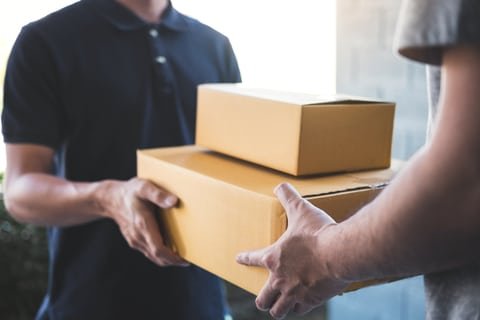
Because customer experience matters. Customers order at the click of a button through apps, websites and other digital platforms. Often, the only humans they interact with are your delivery team. That makes final-mile delivery the customer experience, not an afterthought.
And for many organizations, that last link in an otherwise digitized supply chain remains the weakest.
But it does not have to be.
The Final-Mile Delivery Problem
Final-mile delivery, also called last-mile delivery, is complex, decentralized and highly regionalized.
Shippers face hundreds or thousands of local and regional carriers, many offering specialized white-glove capabilities. The final step in your supply chain might have big and bulky delivery requirements. Or it might require inside placement and installation services.
Finding last-mile delivery partners can be time-consuming. Shippers must deal with disparate technology standards and manual onboarding processes. Some delivery options have inconsistent tracking visibility.
And each new carrier often requires a new integration. Each integration requires IT resources. Each build introduces new data formats, status codes and operational inconsistencies.
The result is predictable: fragmented data, manual workarounds, spreadsheet tracking, delayed visibility and slower scaling.
That’s a huge bottleneck in digital supply chain networks that promise one version of truth. Final-mile delivery often remains disconnected from the rest of the ecosystem.
That gap becomes especially painful when scaling into new markets.
Why Traditional Last Mile Integration Fails
Most organizations first tackle last-mile logistics delivery challenges by building direct integrations with individual carriers.
But what might be manageable in ones or twos does not scale when dealing with hundreds.
Each carrier may use different API structures, EDI formats, FTP workflows, status update definitions and proof of delivery standards.
Over time, cracks widen.
IT teams become bottlenecks. Onboarding stretches from weeks into months. Carrier performance data is difficult to normalize. Humans keep having to step in areas that automation and last-mile delivery software should handle.
Months-long onboarding cycles are unacceptable. The supply chain moves too fast for that.
A Middleware Model Changes Final-Mile Delivery
There is a better approach.
Avoid the hassle of integrating with each final-mile carrier individually by adopting a middleware platform. This last-mile delivery software connects shippers with a nationwide network of prevetted final -mile providers.
The Tompkins Ventures model is simple: integrate once, access many. A single connection gives shippers access to more than 1,500 prevetted final-mile carriers spanning:
- Inside placement
- Parcel
- Big and bulky
- White-glove
- LTL
- Pool distribution
API, EDI and FTP connectivity options allow organizations to activate multiple carriers without building or maintaining custom technology for each provider.
Our partner’s architecture normalizes data exchange across carriers. Status updates follow consistent definitions. Proof of delivery becomes standardized. Exception management becomes automated.
The fragmented last-mile delivery market becomes a unified, digital network.
The system fully integrates most carriers in days, not months. This helps companies go-live rapidly and scale confidently. Real-time shipment visibility flows through a normalized data layer, eliminating manual spreadsheets and portal hopping.
Transaction-based pricing further removes the barrier of expensive integration projects. Organizations can scale up or down without heavy fixed technology investments.
In short, final-mile delivery becomes infrastructure rather than improvisation.
Rapid Market Entry Proves the Point
Consider a fast-growing delivery company seeking rapid expansion.
In 2023, this organization entered three new metropolitan markets within weeks rather than months. The platform connected the corporation to sourced and vetted carriers. That removed a major bottleneck in expansion plans. And the company launched operations in Seattle, Denver and Minneapolis in record time.
Performance improved significantly. On-time delivery increased from approximately 80% to over 95%. Customer inquiries of “Where is my order?” declined. Satisfaction rose.
The platform supported thousands of deliveries per day without requiring additional headcount. The flat pricing model made financial planning predictable and scalable.
Final-mile delivery became an accelerator, not a constraint. And that shift changes more than delivery performance. It changes how the entire digital supply chain network functions.
Final-Mile Delivery Is Where Digital Strategy Meets Reality
In a true digital supply chain network, every step connects. Data flows from sourcing to manufacturing to transportation to order fulfillment.
But delivery is the final step.
It is the last physical handoff in a long digital journey. And if that step breaks down, everything upstream loses value.
You can engineer the most advanced warehouse, shorten production cycles and improve planning accuracy. But if delivery times slip, boxes arrive damaged or drivers appear unprepared, the customer blames you.
Because the delivery team is the only human interaction they will ever have with your brand. They never meet your sourcing teams or tour your distribution center. They only see the person at the door.
When that experience goes wrong, the damage is real.
Every executive has heard the stories. Sofas left outside in the rain despite paid inside delivery. Medical devices dropped, broken and re-boxed without explanation. Late arrivals that force customers to take another day off work.
In those moments, customer satisfaction drops fast. And it takes far more effort to repair a damaged reputation than to ensure faster deliveries the first time.
That is why final-mile delivery cannot operate as a disconnected afterthought. It must fully integrate into a company’s digital supply chain network.
Only then can supply chain teams measure service levels consistently, improve routing decisions and support optimizing routes at the neighborhood level.
When final-mile delivery connects seamlessly to the rest of the network, the supply chain no longer ends at the dock door.
It ends at the customer’s doorstep.
From Fragmentation to Competitive Advantage
Customers measure brands by delivery experience. Boards measure performance by service levels and margin. Supply chain leaders measure success by agility and resilience.
Final-mile delivery touches all three. It doesn’t have to be fragmented and slow to scale. It does not have to rely on manual processes and disconnected systems.
Final-mile delivery does not have to remain the weakest link.
Tompkins Ventures helps organizations rethink how this critical step connects to the broader digital supply chain network. When final mile becomes fully integrated, companies gain speed, visibility and confidence at the customer doorstep.
If your final-mile strategy feels fragmented or slow to scale, it may be time to rethink the architecture behind it – before it limits your next phase of growth.
Related Reading
- How the Right Yard Management System Saved Millions
- Holiday Returns Often Tank Reverse Logistics Processes
- Parcel Invoice Auditing Yields Automatic Refunds

Tompkins Ventures matches your enterprise’s challenges with our network of 1000s of Commercial Partners, Capital Partners and Consulting Partners. Our toolbox is unlimited, as every Tompkins Ventures Partner has decades of experience helping companies address the five major factors for business success: Leadership, Capital, Technology, Supply Chain/Facilities and Procurement. In today’s business environment of continual disruption, even the best companies do not do everything great. Your core competency is your business. Our core competency is selecting the right Partner(s) to work with your executive teams to make good companies great. Business strategy and supply chain expert Dr. James A. Tompkins founded Tompkins Ventures in 2020. Our network is based in the U.S. but operates on all continents except Antarctica.