
Bad Customer Experiences Can Kill Your Company’s Future
Are your reverse logistics processes failing? Sadly, I see a lot of that during the holidays with retailers, ecommerce – and the 3PLs who serve them.
Because the holidays don’t really end when the decorations come down. In many ways, that’s when the real operational test begins.
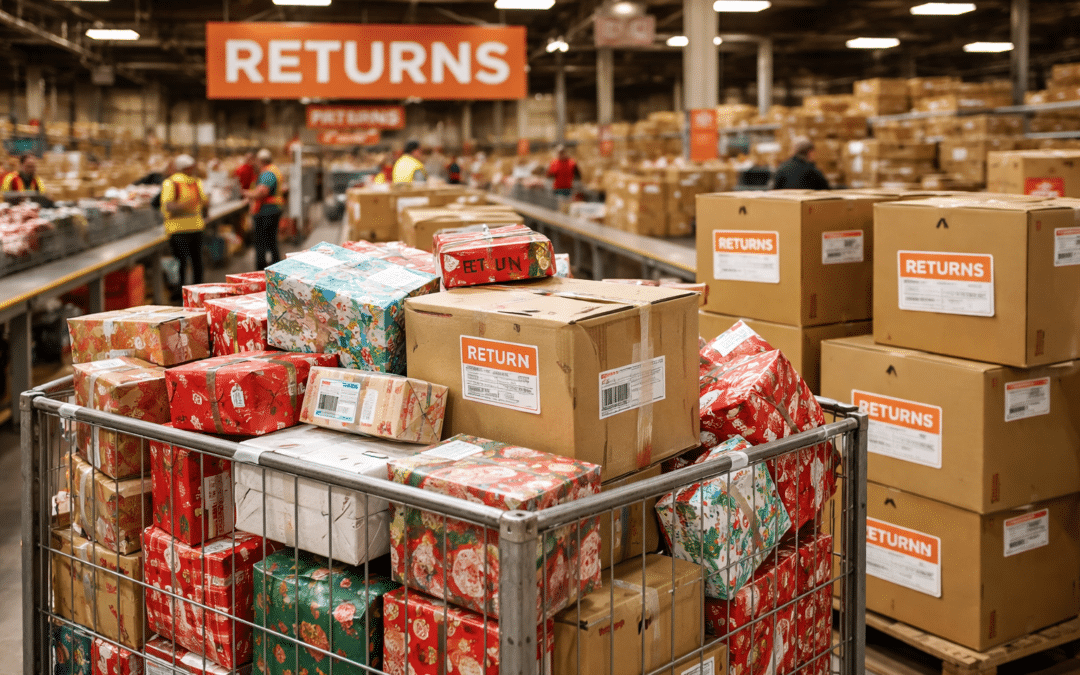
Late December through January brings a flood of returns. Boxes pile up. Systems strain. Customer patience thins.
And for many organizations, reverse supply chains that were “good enough” in peak season suddenly crack. And holiday returns are just part of the equation. This year, the National Retail Federation predicts that consumers will return nearly $850 billion worth of merchandise, about 16.9% of all retail sales.
If those customers run into snags, you could kiss your company’s future sales goodbye.
According to Tompkins Ventures partners, 92% of customers who have an easy returns process will buy again from the same brand. And 70% of first-time customers decide future purchases based on their experience with product returns.
Once you get out from under the post-holiday deluge, smart business owners won’t sigh in relief and move on. They’ll step back and ask: What could returns become if we designed them intentionally?
Returns Are No Longer Just a Cost
For decades, companies treated returns and exchanges as necessary evils. They designed reverse logistics processes to be as cheap and quiet as possible.
That mindset is outdated.
Today, returns are one of the most direct touchpoints you have with customers after the sale. A smooth, transparent and fast return experience builds trust. A frustrating one erodes that trust.
Customers remember how you handle problems more than how you handle perfection. A positive return experience directly contributes to brand loyalty and repeat purchases. Done right, returns are not the end of the customer journey. They are part of it.
Academic research backs up that contention. A transparent and engaging return experience is a powerful marketing tool.
That opportunity extends beyond retailers and etailers. Manufacturers gain insight into product quality and failure points. And for 3PLs, returns management has become one of the highest-value services they can offer.
Why 3PLs Should Lean In
For third-party logistics providers, managing returns is becoming a competitive advantage.
Returns offload a major operational burden from retail and manufacturing clients. 3PLs that offer effective reverse logistics operations help their clients manage complexity, reduce costs and uncover insights into the drivers behind return volumes.
This goes far beyond picking, packing and shipping.
Returns management enables revenue from labels, repair services, grading, refurbishment and disposition. It creates stickier relationships and positions the 3PL as a strategic partner, not just an execution arm.
For 3PLs willing to think differently, reverse logistics is a high-margin, high-value growth opportunity.
Reverse Supply Chains Are Different by Design
One reason returns go wrong is that companies try to force them into forward logistics systems.
Returns operate under different rules. Different timelines. Different expectations.
Customers want visibility and fast resolution. Businesses want to minimize cost and recover value. Sustainability pressures demand less waste and smarter decisions for recycling or disposal.
Meeting all three requires purpose-built reverse supply chain capabilities, not patches or workarounds.
A modern approach starts with customer-facing return portals that are easy to use and fully branded. From there, systems should intelligently route items based on condition, location and value potential.
Returned items are not all equal. Companies should resell some immediately. They should repair, refurbish or liquidate others.
But however you dispose of returned product, you need careful analysis about why they came back in the first place. Otherwise, the same costs and problems will plague your company over and over again.
Data Turns Returns into Insight
That’s the real power of a modern, optimized reverse logistics platform – intelligence, not just speed. Not just for the holiday return season, but for the entire year.
Advanced analytics allow you to see trends across brands, collections and components. You can identify which parts fail most often and which products you repeatedly repair.
Most importantly, you can see which defects cause the most damage or dissatisfaction.
That insight feeds better design decisions, better supplier conversations and fewer returns in the future.
It also improves communication. Customers waiting for repairs or replacements want updates, not silence. Proactive communication builds confidence even when something has gone wrong.
Returns become a feedback loop, not a dead end.
The Best Time to Act on Returns Is Right After the Rush
Many organizations wait until late summer or early fall to talk about returns. By then, it is too late.
You cannot build reverse supply chains in a quarter. They require integration, process design and change management.
The ideal time to rethink returns is immediately after peak season, when the pain is fresh and the data is rich. Once you work through the holiday return surge, step back and design for the future.
That is where Tompkins Ventures comes in.
We help retailers, etailers, manufacturers and 3PLs connect with end-to-end reverse supply chain solutions that turn returns into a strategic advantage. From customer portals and repair tracking to analytics that reveal root causes and brand-wide trends, the goal is simple: recover more value, improve the customer experience and build loyalty.
Returns are not going away. They are growing. The companies that win will be the ones that stop treating the reverse logistics process as a burden and start treating it as an opportunity.
Once the holiday returns calm down, let’s talk. Together, we can discover how to make your reverse supply chain stronger, smarter and ready for what comes next.
Related Reading
- Customers Need Easy Returns
- 3PL Markets Demand Speed – But Too Many Are Standing Still
- “Old” eCommerce Requires New, Agile Strategies

Jim Tompkins, Chairman and founder of Tompkins Ventures and Tompkins Solutions, is an international authority on designing and implementing end-to-end supply chains. Over five decades, he has designed countless industrial facilities and supply chain solutions, enhancing the growth of numerous companies. Jim earned his B.S., M.S. and Ph.D. in Industrial Engineering from Purdue University.