
From Occasional Counts to 98 Percent Carton Accuracy
With supply chains more complex than at any time in history, occasional inventory counts leave companies unsure about what sits in their warehouses or on their shelves. Today’s RFID inventory systems can solve that problem.
But only if a company knows what to evaluate before signing a contract.
Most companies skip that evaluation. They compare price tags, pick a familiar name and sign.
One operation that took a more deliberate approach moved carton accuracy – the share of cartons confirmed accurate at line speed without a manual check – from 80 percent to more than 98 percent. The company also recovered 23 hours of labor every day. With that accuracy and labor savings, the system paid for itself in three and a half weeks.
Tompkins Ventures guides companies along that deliberate approach. Our partners examine the organization and then design the system that meshes with operations, integrating the finished records into business systems.
When Nobody Owns the Entire RFID Inventory System
Without a framework, most purchases follow the same pattern. A company gets several quotes, picks the lowest number or the most familiar name and moves forward. Usually, the major deciding factor is price.
The problems only show up later – especially with inventory management systems.
Hardware does not talk to the existing warehouse management system. Labor remains tied up with the manual checks the system should have eliminated. That plug-and-play system actually needs a systems integrator after all.
By that time, walking away costs as much as staying.
These problems happen because of the nature of today’s market, where many vendors take accountability for hardware only. They may even use third-party contractors or bolted-on software.
With Tompkins Ventures, the same team that examines the site deploys and integrates the inventory tracking system into ERP, WMS, POS (point of sale) and reporting tools.
They do not pull that system out of a catalog. Instead, they own the hardware, software and operating systems. Companies get one accountable system instead of separate hardware, software and integration vendors. And that system matches the right vertical: warehousing, food/beverage, retail, military and more.
What an RFID Inventory System Selection Should Actually Weigh
Good RFID inventory management starts before the contract, not after installation. Four questions separate a system that fits operations from one that creates new problems. Each one exposes something a sales pitch often skims over.
Integration: The strongest systems tag each item once, at labeling and packing. In other words, they build identity into each item from the outset. Then they verify that identity again as product moves through the facility.
RFID readers at dock doors record every carton crossing in real time, without needing line of sight like a barcode scan. Shorts and substitutions surface before a truck ever leaves. The same systems pull counts from equipment already in service – forklifts, sweepers, picking carts – turning cycle counting into a byproduct of routine work instead of a scheduled shutdown.
With one partner designing the hardware, software and operating system, the company’s IT team does not have to stitch things together after installation.
Cost structure: A hardware-as-a-service and software-as-a-service model spreads RFID cost over a subscription rather than a large capital purchase. That is often the more cost-effective path for the operation.
Companies that already run scanning equipment on the floor avoid paying for a second, dedicated fleet. The math changes considerably when equipment already in service does double duty.
Retailer mandates: Thousands of companies now must print, encode and apply RFID tags to meet retailer requirements. A system built for this generates and verifies each tag at the point of packing, in the same operation that creates it. Companies do not need to add on a separate manual process afterward.
Chain of custody: Misplaced, misreceived and falsely reported inventory costs the industry billions of dollars every year. A validated, authenticated record settles disputes over claims and returns instead of leaving the outcome to whoever argues loudest.
The same principle extends to returnable assets such as pallets moving between facilities and partners. Building identity into the asset itself rather than a label that can tear off in transit or fail to hold up outdoors, and then validating that identity at every dock crossing and every pass by equipment already working the floor, makes long-term asset management possible.
Asking these four questions does not take special expertise. Evaluating the answers correctly, and picking the partner who delivers on all four, does.
What Actually Happens at Line Speed
Consider an example from outbound logistics, where workers often manually confirm what is in the box. Accuracy depends on a person’s attention span, and errors often do not surface until customers receive incorrect orders.
That risk and labor cost repeat on every carton, every shift, permanently.
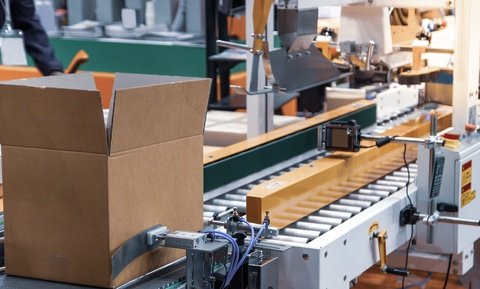
A well-designed system reads each carton’s contents as it moves through packing, not after. Correctly packed cartons continue down the line. The system diverts incorrectly packed cartons, with details attached.
Each carton takes just two to four seconds to pass through the read zone. That is far faster than the longer dwell time associated with most published RFID accuracy claims. Companies need a system tuned to their actual speed and “worst-case” carton, not a pilot test under ideal conditions.
Vendors should be able to back up their accuracy rating by answering two questions: What did the system measure? And under what conditions was it measured?
Likewise, a system that picks up stray signals from neighboring equipment cannot produce a reliable carton-by-carton result. Resolving overlapping signals makes a clean result possible even on a busy line.
And if the pass-or-fail decision happens too late, none of the above matters.
Put all that together, and RFID inventory systems can save time, labor and increase accuracy rates. Companies willing to evaluate the details this closely can see results like a 98 percent-plus carton accuracy rate.
The Evaluation Matters as Much as the Technology
Such results do not come from RFID technology alone. They come when companies ask about integration, cost, retailer mandates and chain of custody before signing anything. Then they hold the partner they choose to a standard proven in production, not promised in a pitch.
That discipline separates a system that fits an operation from one that creates new problems six months in. Interested in such results? Connect with Tompkins Ventures. The right evaluation, run early, can turn 80 percent into 98 percent.
Related Reading
- RFID Inventory Management Systems Are Your Foundation
- ECommerce Delivery Tracking Requires Parcel TMS
- Inventory Tracking Systems that Pay for Themselves

Tompkins Ventures matches your enterprise’s challenges with our network of 1000s of Commercial Partners, Capital Partners and Consulting Partners. Our toolbox is unlimited, as every Tompkins Ventures Partner has decades of experience helping companies address the five major factors for business success: Leadership, Capital, Technology, Supply Chain/Facilities and Procurement. In today’s business environment of continual disruption, even the best companies do not do everything great. Your core competency is your business. Our core competency is selecting the right Partner(s) to work with your executive teams to make good companies great. Business strategy and supply chain expert Dr. James A. Tompkins founded Tompkins Ventures in 2020. Our network is based in the U.S. but operates on all continents except Antarctica.